responsible AI resources
a work-in-progress repository from an early-career researcher of resources for learning about and putting into practice use of artificial intelligence in as world-friendly way as possible (and consideration of whether that is even possible at all).
self risks
societal risks
organisational risks
free learning
Ask Yourself
De Minimis
Proudly Human have some nice examples of how you might consider what is de minimis usage of AI.
self risks
societal risks
organisational risks
free learning
"Human-Made" Indicators
There are quite a few resources and initiatives out there for identifying human-made products - so many that this in itself is a bit of a problem, as we have no single unifying recognisable mark to utilise. Still, here are some of the options. The EU have recently introduced mandatory labelling of AI content, which would be more helpful (I believe) than identifying human content - but whatever works will be whatever works.
Human-Made Icon Pack - by Hinokodo on Itch.io and the pixel-art alternative version by Hairic.
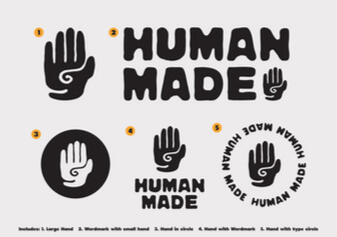
Made by Humans Asset Pack - by lonearchivitst on Itch.io.
Not by AI - which includes many different language options and variants for different creations. Requires a subscription for verification that projects are actually human-made.
No-AI Icons - a collection of different icons that are free to use (not all that pretty imo).
Human Made Art - another service that "proves" art was created by only humans.
Oni Press's 100% Human-Made - a logo designed by the comics group Oni Press, known for properties like Scott Pilgrim.

Books by People - a platform that highlights human-created works of text.
Proudly Human - a further service for human-made content certification, across different creation types.

Human Authored - a logo scheme that is open to Society of Authors members only.
AI-Free.io Labels - logos that you acquire by agreeing to an AI-free code of conduct.

No AI Symbols Github - variety of symbols by github user michaelmandic.

self risks
societal risks
organisational risks
free learning
Ask Yourself
Anthropomorphisation
self risks
societal risks
organisational risks
free learning
Ask Yourself
CETaS White Paper on Never-Skilling, Deskilling and Upskilling with examples from Legal and Health sectors.
self risks
societal risks
organisational risks
free learning
Ask Yourself
self risks
societal risks
organisational risks
free learning
Environment
Tools
Digital Good Index - set of tools to evaluate whether digital technologies have good societal outcomes.
self risks
societal risks
organisational risks
free learning
Data (Privacy and Security)
Tools
Centers
Data centers come in many forms - and we have been using them in their modern co-located form since around the growth of the internet in the 1990's. Their development has only increased since the boom in cloud computing and they come in many different types. Enterprise centers are typically located on corporate campuses, serving internal users. Cloud centers provide off-premises services for businesses worldwide, effectively rentally.
Terminology
Hyperscaler - basically means "big and powerful". In relation to organisations, these are large-scale computing companies with very large networks. For data centers, these are on the large and more extreme end of size, to cope with widescale or high volume processing. The first one is considered to be Google's 2006 center in Oregon.
White Space - the proportion of space allocated in a data center to actual IT equipment and infrastructure. Hyperscalers often (but not always) optimise this better than older centers.
Grey Space - the back-end space in the building complex that
Campus - a land development with multiple interconnected data center buildings
Tools
Data Center Map - One of many mapping services identifying data centre locations globally, with filters.
self risks
societal risks
organisational risks
free learning
Ask Yourself
self risks
societal risks
organisational risks
free learning
Ask Yourself
self risks
societal risks
organisational risks
free learning
Ask Yourself
US-based Civic AI Security Program - interesting demo page on how different LLMs respond to ethical, social and political questions, to examine their biases.
self risks
societal risks
organisational risks
free learning
Ask Yourself
The AI Cognition Initiative - research group that examines AI as moral agents and moral patients (* - explain this)
self risks
societal risks
organisational risks
free learning
Ask Yourself
Tools
Digital Good Index - set of tools to evaluate whether digital technologies have good societal outcomes.
self risks
societal risks
organisational risks
free learning
Ask Yourself
Google's SAIF Risk Assessment tool - interactive tool for AI developers and organizations to take stock of their security posture, assess risks and implement stronger security practices.
self risks
societal risks
organisational risks
free learning
Ask Yourself
self risks
societal risks
organisational risks
free learning
Ask Yourself
self risks
societal risks
organisational risks
free learning
Ask Yourself
------
self risks
societal risks
organisational risks
free learning
Ask Yourself
self risks
societal risks
organisational risks
free learning
Other Useful Bits
UKRI Digital Research Skills Catalyst - 50+ learning resources, events, and expert-led training on digital research skills.
LLM API Resources - Github summary page of free access/credit tools which may be useful for learning purposes.
80,000 Hours' Part Time Courses - a list of part-time courses around AI top problems.
The AI Resist List, a project that centralises radical alternatives to mainstream AI thinking.
Research
Social robotics projects at the University of Birmingham combining ROS and Python including game-playing robots
Toy project demonstrating effects of executive dysfunction in Python RL agents, mimicking disruption of the speed-accuracy trade off in metacognitive structures embodied in the CogAff Schema, supervised by Jeremy Wyatt and Dean Petters.
Mood-based alterations of the RL algorithm SARSA to elicit changes to learning behaviour in multi-agent simulations of the Repeated Prisoner's Dilemma, including dynamic networks and Erdős–Rényi graphs. Supervised by Shaheen Fatima.
Examining effectiveness of measures of Responsible AI implementation in consultation with local and central government. Working alongside Denis Newman-Griffis.
Analysing data on HE courses that train AI skills, including HESA datasets on a variety of crosswalks. Working alongside Denis Newman-Griffis.
self risks
societal risks
organisational risks
free learning
Frequently Asked Questions
++++ Why does this website exist?I'm an early career researcher and, almost daily, I stumble across useful resources that I want to keep a note of, but also end up sharing to others. It felt convenient and helpful to gather all of the resources I find interesting into one place.That doesn't mean that this website is by any means comprehensive or thorough. I am learning just like you are learning. If you think something is missing, please send me a message through the form below. 😊++++ Was this website made with AI?Nope! It uses a service called carrd, which utilises templates and easy-to-build websites. You can use it for free (though I have a subscription).++++ What is the bias of the person that made this website?My personal opinion on AI is varied. Traditional AI is very helpful, but already exhibited issues that have been amplified and demonstrated to the public in the boom of public GenAI tools. On GenAI itself, I am still mixed - some of the usage is helpful and valuable, but the risks and harms are very apparent and I believe we need to use such things with caution and not just to edit photos of us into cartoons. I fully understand that this requires a debate about what usage is valuable, which I think is interesting in of itself.TLDR: a little bit of good, a little bit of bad, a little bit of never trust a large exploitative private corporation.
self risks
societal risks
organisational risks
free learning
Interesting Research Networks
PAVE Casebook (Public AI Voice and Engagement Case Book) - a shared repository of case study data on participatory AI projects.
ESRC's Digital Good Network - research community examining equity, sustainability and resilience in digital societies.
self risks
societal risks
organisational risks
free learning
Social Interaction